Arts-in-Health: Claims and Criticisms
Arts-in-health is the practice of applying arts initiatives to promote, maintain, or improve health and wellbeing outcomes. While the systematization of arts-in-health practices in the Western setting is relatively novel, the arts have been used for health and wellbeing since the Middle Ages. These activities have been used in a variety of populations and settings, and are reported to be associated with many benefits such as increased tolerance and compassion in youth; improved mood, mental flexibility, and communication; reduced cognitive decline in older adults; and increased quality of life for patients and caregivers. These activities are evaluated by quantitative metrics (physiological responses, wellbeing scales, and pain), qualitative measures (e.g., observation, focus groups, interviews), participatory research, and thematic analyses.
The variability in evaluation and analysis, while a necessary feature of the arts and their practitioners, leads to challenges as well. Some issues are problems with randomization, inadequate control of concomitant factors, and difficulties with statistical analysis and its reporting. It has been suggested that these methodological weaknesses cast doubt on claims that arts-in-health practices are associated with health benefits. Other challenges in arts-in-health evaluation relate to ethics and the appropriateness of measuring outcomes, and philosophical concerns in measuring the ineffability of art and its relational aspects. Subjectivity in perception of benefit, difficulties in standardization and systematization of programs, and the highly individual and contextual nature of the artistic interventions are additional issues.
It is clear that a more robust approach that considers a plurality of viewpoints and methodologies is needed in arts-in-health research. In this essay, I draw a connection between the fields of arts-in-health and conservation science, specifically with respect to the use of traditional systems of knowledge. I describe how traditional art forms like Bharatanatyam can help frame arts-in-health programs through two separate but related points:
Traditional art forms center reciprocity and relationships
The impacts of traditional art forms may seem small and insignificant to someone not familiar with the accompanying tradition and culture
The Treatment of Traditional Knowledge Systems
This article was originally envisioned as a paper for an academic journal, but I am publishing it here to share these ideas more widely. While traditional and indigenous knowledge systems are generally regarded as valuable, formal research practices have not been historically respectful of them. Indeed, many have commented that Western scientists value traditional forms of knowledge when it supports their claims, but dismiss it when it doesn’t. Indeed, research is often associated with the marginalization, silencing, and erasure of indigenous voices; extractive practices; and the lack of mutuality between researchers and indigenous communities.
Conservation Science: Similarities with Arts-in-Health
The practice of conservation encompasses soil, air, water bodies, land, plants, animals, ecosystems, microbes, humans, and economic practices such as fishing and agriculture. The impacts of these practices range from increased biodiversity, climate change resilience, reduced soil erosion, to decreased human-wildlife conflict, and many more.
While not perhaps apparent at first glance, there are many similarities between arts-in-health and the field of conservation.
Both fields are complex; in conservation, the impacts vary from a population of animals to a species to an entire ecosystem. In arts-in-health, effects can be on an individual’s body and psyche, their family, and possibly the community at large.
The impacts are interconnected – in conservation, impacts are often interwoven, e.g., “keystone” species such as the sea otter prey on sea urchins and help maintain the balance of kelp forest ecosystems. Such an interconnection would not be clear if a researcher were looking at the sea otter, the sea urchin, or the kelp in isolation. Similarly, in arts-in-health, the facilitator, the participants, and the setting all coalesce to produce effects that must be viewed and appreciated holistically.
Effects may be over a variable timescale. In conservation, researchers often work in ecological timescales. For example, the recovery of bald eagles due to habitat destruction and pesticide use took more than five decades of positive action taken as per the Endangered Species Act. Similarly, depending on the artistic modality in question, the setting, and attributes of participants and facilitators, impacts could be perceptible in a couple of sessions or after years-long engagement with the arts.
The evaluation of conservation efforts is difficult, with one report suggesting that conservation efforts are “inconsistent, uneven, and often badly measured,” and ongoing discussion about the impact of data.
Lastly, both fields have a wealth of seemingly unorganized and underutilized information in the form of traditional and indigenous knowledge systems.
Traditional and Indigenous Knowledge Systems
Indigenous knowledge consists of observations, oral and written knowledge, innovations, practices, and beliefs developed by Tribes and Indigenous Peoples through interaction and experience with the environment. Traditional and folk practices are formed and rooted in the cultural life of a community. While seldom measured using Western scientific frameworks, traditional and folk arts are maintained and constantly strengthened through standards of excellence that are contextual and passed from one generation to the next.
Traditional knowledge systems provide a unique glimpse into how knowledge, theory, practice, implementation, and refinement are rooted as one. Deeply embedded in the history, culture, and context, these practices cannot be separated from people and their heritage. These knowledge systems formulate an aggregation of the modes of response to stimulus in a non-linear system and acknowledge that seemingly small actions can have a big impact. Lastly, practice and evaluation of traditional knowledge are closely linked – it is difficult to imagine a scenario where someone without the necessary context and history of the practice could appraise the impacts of the knowledge.
Collaboration Between Scientists and Traditional Knowledge Bearers for Conservation
Several examples show the partnership of scientists and modern technology with traditional and indigenous knowledge systems.
The Virunga National Park in the Democratic Republic of the Congo has been listed as a “World Heritage Site in Danger” due to political unrest. Here, Pygmy Indigenous trackers are skilled in knowing calls, songs, footprints, and other signs of small and large mammals that exceed what modern technology can do. Due to this deep and holistic knowledge built and refined over generations, Pygmy Indigenous trackers inform researchers to conduct rigorous monitoring in the field and join researchers to fight poaching.
In the Pacific Northwest, this kind of integrative scientific strategy was used to predict, forecast, and manage harmful algal blooms. After the 1989 Exxon Valdez oil spill, modern technology and traditional knowledge were used to monitor injured species and the complex interrelationships between them.
In agriculture, a collaborative venture between Native American nations and researchers led to a deeper understanding of a practice known as “The Three Sisters”, where corn is intercropped between beans and squash for sustainable agriculture. Scientific methodologies tell us this practice makes sense – beans contribute nitrogen to the soil, corn and squash provide ground cover and support; hence, the crops, when grown together, fare much better than if they were planted individually. A linear analysis that focuses primarily on what we expect to get out of the soil, and not on the system that produces it, is likely to miss the significance of a practice that is associated with rituals and stories that pass this knowledge from one generation to the next.
Indeed, the field of marine conservation guides how traditional knowledge systems can be centered in conservation practices. These best practices developed by the National Oceanic and Atmospheric Administration (NOAA) place indigenous knowledge systems to understand the environment and adapt to environmental change. The three tenets of this guidance are: “Cause No Harm; Free, Prior and Informed Consent; and Knowledge Sovereignty”.
Traditional Art Forms to Evaluate Arts-in-Health
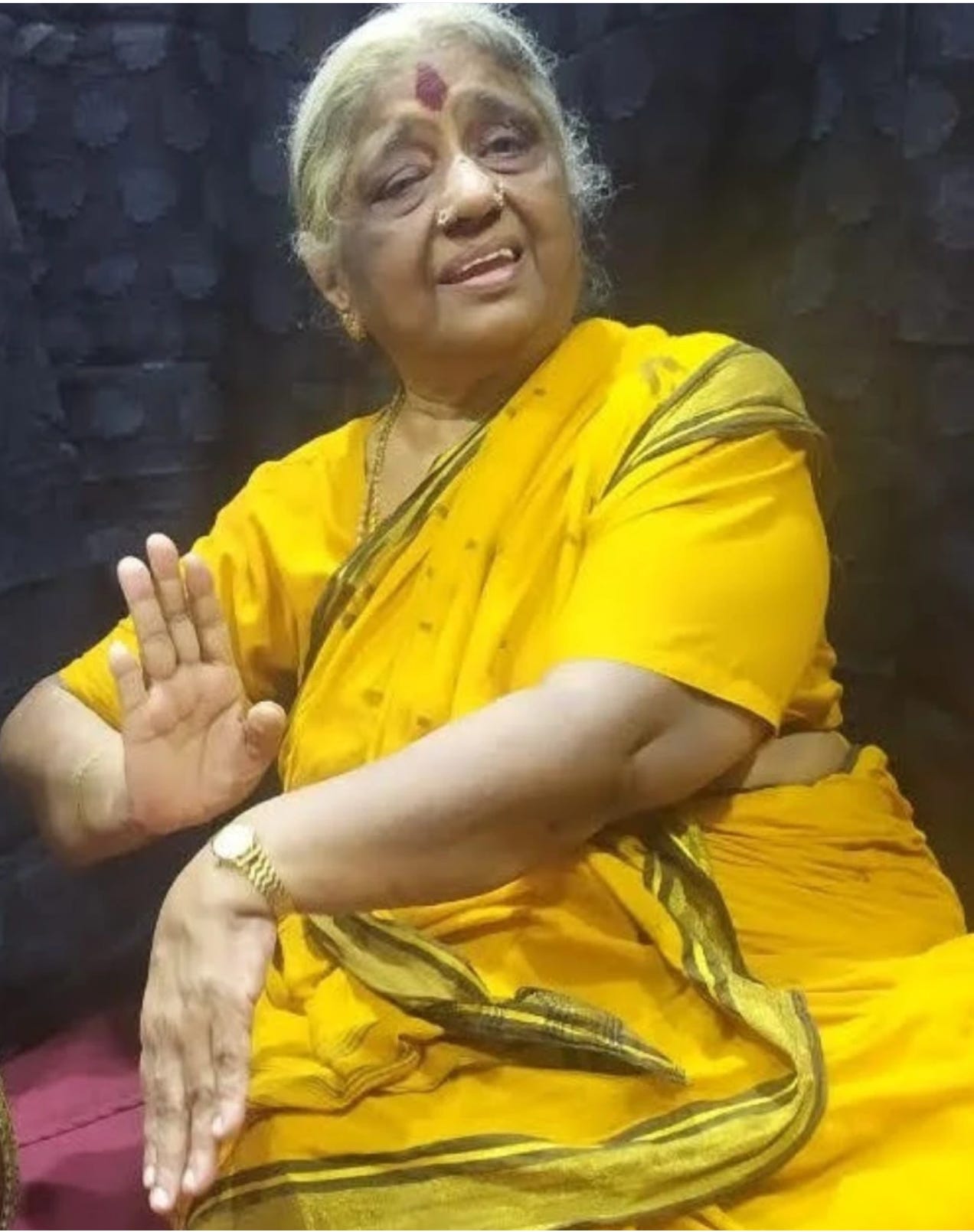
I am a practitioner of the traditional Indian dance form called Bharatanatyam. This narrative dance form consists of a vocabulary of hand gestures, emotions, melody, rhythm, and percussion, and can be used to communicate traditional or contemporary stories. The learning and teaching of Bharatanatyam happen in an organized manner over decades, and learning this art form subsists on the lineage of practitioners. My gurus embody the learning, teaching, and doing of art, and its role in the health of the individual and their relationship with the world around them. Their teachings help me understand what I see in my creative aging sessions. The image below is of my guru, Smt. Maheshwari Nagarajan, affectionately known as “Amma”.
Reciprocity and Relationships
Forms like Bharatanatyam are built on a close relationship between the “shishya” (disciple) and the “guru” (the closest translation of this word in English is “spiritual guide”, “teacher”, or “mentor”). There is also a close relationship between the student and the broader community of practitioners and the ecosystem of supporters. My gurus model sharing and assisting others; so, as students, we would help decorate the stage and venue of the performance, help other dancers get ready, help create props, introduce pieces for them as emcees, etc. In this highly relational way, other dancers would do the same for us. I would accompany my gurus to the cloth market in Ahmedabad and purchase fabric for costumes and embroider them. After each performance, students would make sure that the costumes are aired out and cleaned, the jewelry is checked for breaks and put away, ready for others to use and wear. After several years of learning, my gurus gave me the responsibility of teaching younger students. I oversaw organizing lessons, kept track of accounting, and ensured that my students were ready for recitals.
Food is an important part of Indian culture, and dancers have specific nutritional needs; my guru’s family would routinely cook for students, and students would bring food for the whole group. I see many parallels to this relationship in my sessions. Learners take the initiative to come early, clean the floor, and place a chair for my cymbals and the Nataraja idol. At one center, without being asked, learners advocated for a room with wooden floors and mirrors, which we eventually got access to. Learners create relationships with the cleaning staff and get the room and floors cleaned and chairs properly arranged, adding to the ecosystem of supporters and companions. One learner advocated for clean whiteboards to write words on and purchased whiteboard markers and cleaner fluid. People take the initiative to write on the board, creating an inclusive environment for all students and those who are hearing-impaired. For one participant with diabetic foot pain, others shared ideas for the kind of footwear and grippy socks that might help her.
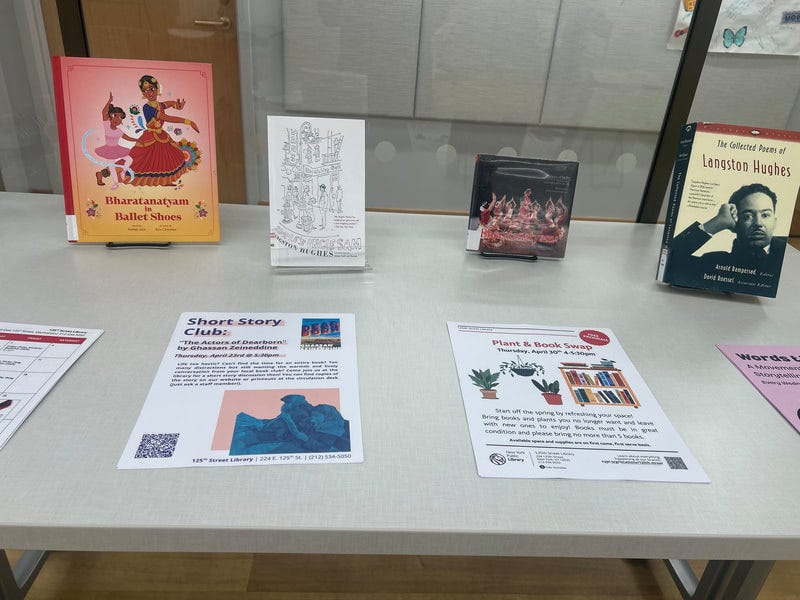
At the school where I learned Bharatanatyam, Darpana Academy for Performing Arts, students had access to a library where we could read and learn more about the culture, mythology, and historical context of the dance form. At one of my sessions at a local library branch, the librarian collected books on India and Bharatanatyam, and several learners borrowed the books (figure below). Just as Amma has us notate pieces and accompanying music, learners notate the pieces in my sessions that they share with others.
These practices help participants become active parts of the dance and take ownership of their learning within the context of the dance and the physical space that we inhabit. These impacts are highly personal, contextual, and nuanced; it is difficult to see how these subtle impacts might be captured by metrics; it is even more difficult to predict how these impacts might interact in a complex system. These relationships need time and trust to build, and in a world that emphasizes quickness and quantifiable metrics, it can be hard to grasp the impact of these acts. To someone not familiar with the art form and without the training, these acts of sharing may not convey their enormity and meaning.
Impacts Over Time
Traditional art forms emphasize cultural preservation and emphasize the interconnectedness of the arts and artists, and can help the practitioner connect to the world and reveal their place in it. I observe a greater level of attention, engagement, and appreciation of the world in my older adult participants. In the words of one participant, “There is more to this dance class than learning steps. I am transported into a magical world of sparkling stars, a forever-changing world. There is a sense of serenity and magical beauty that comes through hand movements. As we move in unison, we become graceful bodies in motion. It is a journey of wonder! It is an awesome and spiritual experience. I also feel a heightened awareness and sensitivity of my surroundings through the dance.” Another person reported, “I don’t know if it’s a result of these sessions, but I feel more aware of my surroundings. I have started noticing the clouds out of my window.”
As a way of expanding one’s artistic horizons, learners have shared paintings they made as part of other sessions. Participants organized a trip to see the public installation of elephant sculptures when in New York City, to get a better idea of the elephant’s stature and vibe, so that they could mimic the elephant’s gait, feeling, and expression in dance. In a variety of settings, I have found that even those without (or perhaps, especially those without) formal training in or exposure to Indian arts grasp what this interdisciplinary immersion means. In the words of one participant: “To learn this dance, you have to be a lover of art”.
Engagement with the world at large connects with the first point of sharing one’s life and beautiful moments in it. Participants share their love for plants. “They are all of love and beauty and part of the cosmos. I have so enjoyed the universal connection that I have experienced in your teaching. It transcends and combines all (positive) thoughts and beliefs. Producing relaxation and encouragement. The class is ending, but the relationship with what you introduced hasn’t.” On the theme of plants and nature, one participant during a virtual session mentioned, “Your plants remind me of my Abuelita’s living room and bedroom.”
While the individual actions in Bharatanatyam may be relatively small, they add up over time with consistent practice. Amma stresses the meaning, nuance, and context of each hasta. Hence, while it is one thing to shape my hands to create the Shikhara hasta where the thumb is straight and all other fingers are bent in a fist, it takes knowledge of the dance form to know if it should be moved fast (showing aggression) or slowly (showing affection). Even if the speed at which the hand moves could be measured, I wonder if we could measure intent. The seeming smallness of steps is related to the fact that depth over breadth is emphasized.

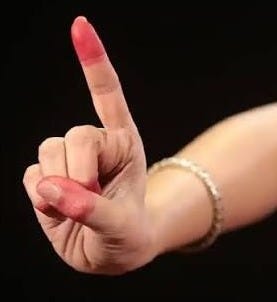
To show the universe, we show planets; the hasta we use is soochi (the index finger points up, and all other fingers are bent in a fist) in both hands above the head, and the movement of the fingers shows the rotation of planets. One learner noticed that the direction of the index fingers should be in the same direction for both hands; otherwise, they will not depict planets. There was also discussion on whether the direction should be clockwise or counterclockwise, leading participants to research the direction in which planets rotate. To capture these seemingly minute things, the researcher must be attuned to and have knowledge of what is being captured; the researcher herself should have contact with her elders who can help contextualize the dance form. Without a sound, deep, and consistent knowledge of the dance form, it would be easy for an evaluator to miss these.
What’s Next?
Several features of arts-in-health could be guided by traditional knowledge. Centering holistic relationships, respect and care for the natural world, sustainability, ensuring transmission of knowledge to the next generation, and the view that arts are not mechanical, scientific practices that can be neatly measured are just a few learnings.
Researchers should expect traditional and indigenous knowledge not to be presented in the familiar forms of surveys, graphs, charts, and journal manuscripts. The language used by researchers and indigenous communities is also important to consider. For example, Amma, who has been learning, teaching, and immersed in Bharatanatyam for over seven decades, would identify herself as someone carrying forward a lineage, and not an individual “artist”, as the word in (her) context borders on pretension and exclusion.
However, the process of integrating these knowledge systems should be intentional, with practitioners of traditional art forms at the center. This approach is likely to involve considerable iteration and time as researchers build trust with and learn from traditional practitioners.
Are there traditional and indigenous practices close to your heart? How do you approach evaluating their impact?